Mount Kilimanjaro stands as one of the most iconic natural landmarks in Africa, renowned for its towering presence and geological significance. Yet, many travellers and adventurers are unsure of its exact location or what makes it so uniquely captivating. In this comprehensive guide, Kilisherpas Travel explores where Kilimanjaro is situated, why it is called the tallest free-standing mountain in the world, and what makes this majestic peak a must-visit destination for explorers worldwide.
The Exact Location of Mount Kilimanjaro
Kilimanjaro’s Geographical Coordinates
Latitude: 3°04′33″ S
Longitude: 37°21′12″ E
Elevation: 5,895 meters (19,341 feet) above sea level
In Which Country Is Kilimanjaro Located?
Despite its close proximity to Kenya, Mount Kilimanjaro is unequivocally part of Tanzania. The mountain is situated within the Kilimanjaro Region, specifically in the districts of Moshi Rural, Hai, and Rombo. Its precise location on the African continent makes it the highest point in Tanzania and the entire East African Rift Valley.
Historical and Political Context
Throughout history, Kilimanjaro has remained within Tanzanian borders, even during territorial disputes with neighbouring Kenya. The International Court of Justice settled these disputes in 1982, affirming that Kilimanjaro is firmly part of Tanzania. The mountain’s coordinates and borders leave no room for doubt about its national belonging.
The Mountain’s Proximity to Key Locations
Nearest City: Moshi, located on the mountain’s southern slopes, is the primary base for most expeditions.
Major Airport: Kilimanjaro International Airport (JRO) serves as the gateway for travellers coming to climb or explore the region.
Nearby Urban Centres: Arusha, known as Tanzania’s safari capital, is about 60 km away and offers additional travel opportunities.
Why Is Kilimanjaro Known as the Tallest Free-Standing Mountain?
The Title Explained
Kilimanjaro is celebrated as the world’s highest free-standing mountain, a natural marvel standing alone on the vast plains of Tanzania. Unlike mountain ranges that form through tectonic plate collisions, Kilimanjaro’s dramatic rise from the surrounding plains makes it an extraordinary geological feature.
Formation and Geology
Tectonic Origins: Kilimanjaro is a stratovolcano formed over the past 2.5 million years through volcanic activity associated with the East African Rift Valley.
Volcanic Cones: It comprises three volcanic cones—Kibo, Mawenzi, and Shira. Kibo is the summit cone, with Uhuru Peak at 5,895 meters. Mawenzi and Shira are extinct volcanoes that add to the mountain’s rugged beauty.
The Great Rift Valley: The rifting process created the fissures and volcanic activity that resulted in Kilimanjaro’s unique structure, elevating it dramatically above the surrounding plains.
Comparison with Underwater Mountains
While Kilimanjaro is the tallest free-standing mountain on land, Mauna Kea in Hawaii surpasses it in total height from base to summit, exceeding 10,000 meters (32,808 feet). However, Mauna Kea’s summit rises only 4,207 meters (13,803 feet) above sea level, making Kilimanjaro the highest on the surface.
What Makes Kilimanjaro So Special?
A Mountain of Many Climate Zones
Kilimanjaro’s impressive elevation results in five distinct climatic zones, each hosting unique ecosystems:
Cultivation Zone (800–1,800 meters): Tropical forests where local farmers grow coffee, bananas, and maize.
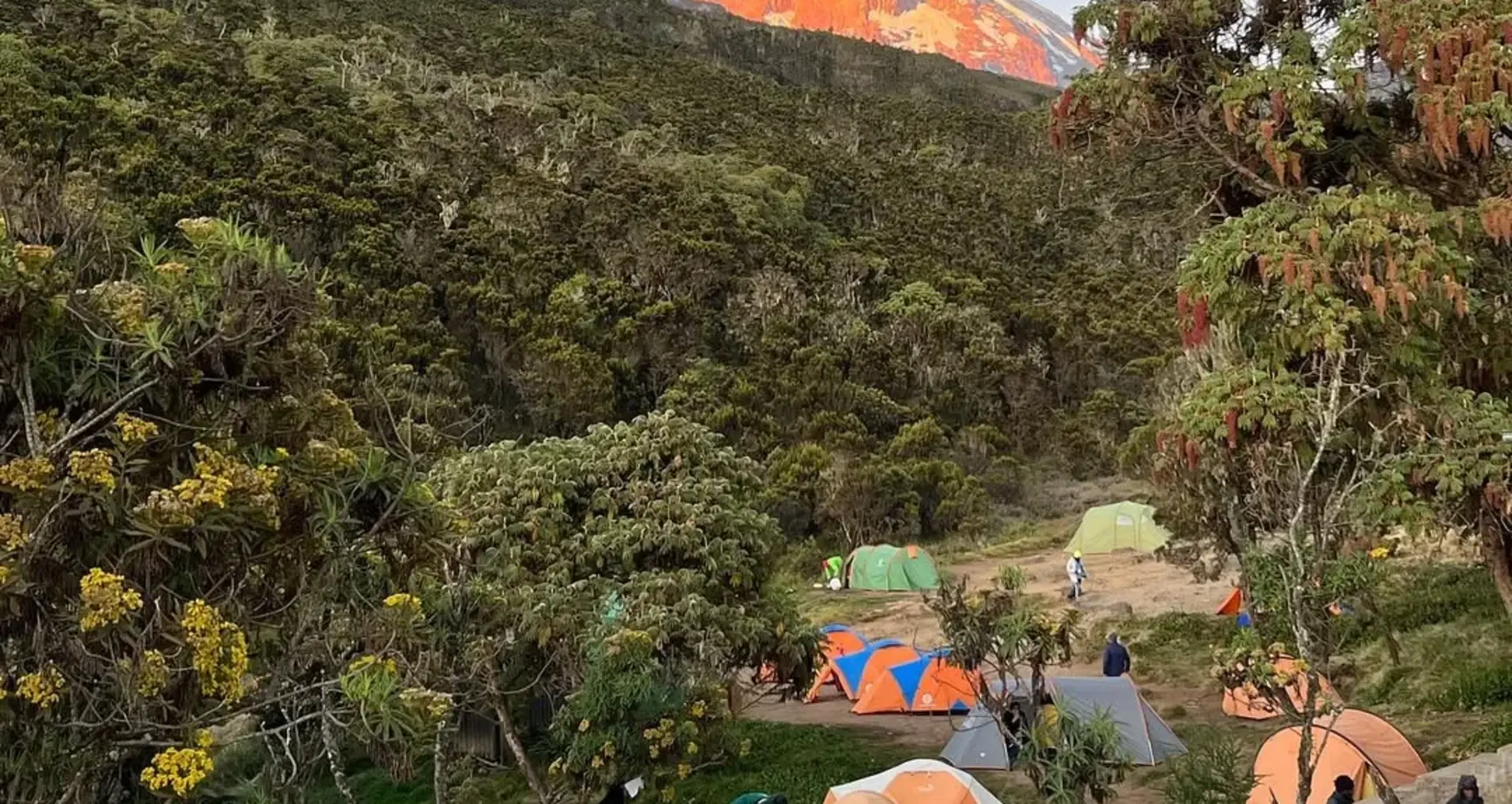
Rainforest Zone (1,800–2,800 meters): Dense jungle teeming with wildlife, including monkeys, birds, and lush vegetation.
Heath and Moorland Zone (2,800–4,000 meters): Characterised by giant groundsels and lobelias, adapted to harsh conditions.
Alpine Desert (4,000–5,000 meters): Barren rocky terrain with sparse vegetation like mosses and lichens.
Arctic Zone (above 5,000 meters): Snow and glaciers, a stark, icy landscape near the summit.
Glaciers and Melting Ice
Despite its proximity to the equator, Kilimanjaro’s summit is capped with glaciers and snowfields. These glaciers, some over 12,000 years old, are rapidly shrinking due to climate change. Current data shows an 85% reduction in ice cover since 1912, with projections indicating they may disappear entirely by 2050.
Unique Flora and Fauna
Kilimanjaro’s ecosystems foster endemic plants like the giant groundsels and Kilimanjaro impatiens, as well as rare animals such as the Kilimanjaro white-eye bird and the Kilimanjaro vlei rat. The mountain’s biodiversity is a highlight for nature enthusiasts.
How to Experience Kilimanjaro
Viewing the Mountain
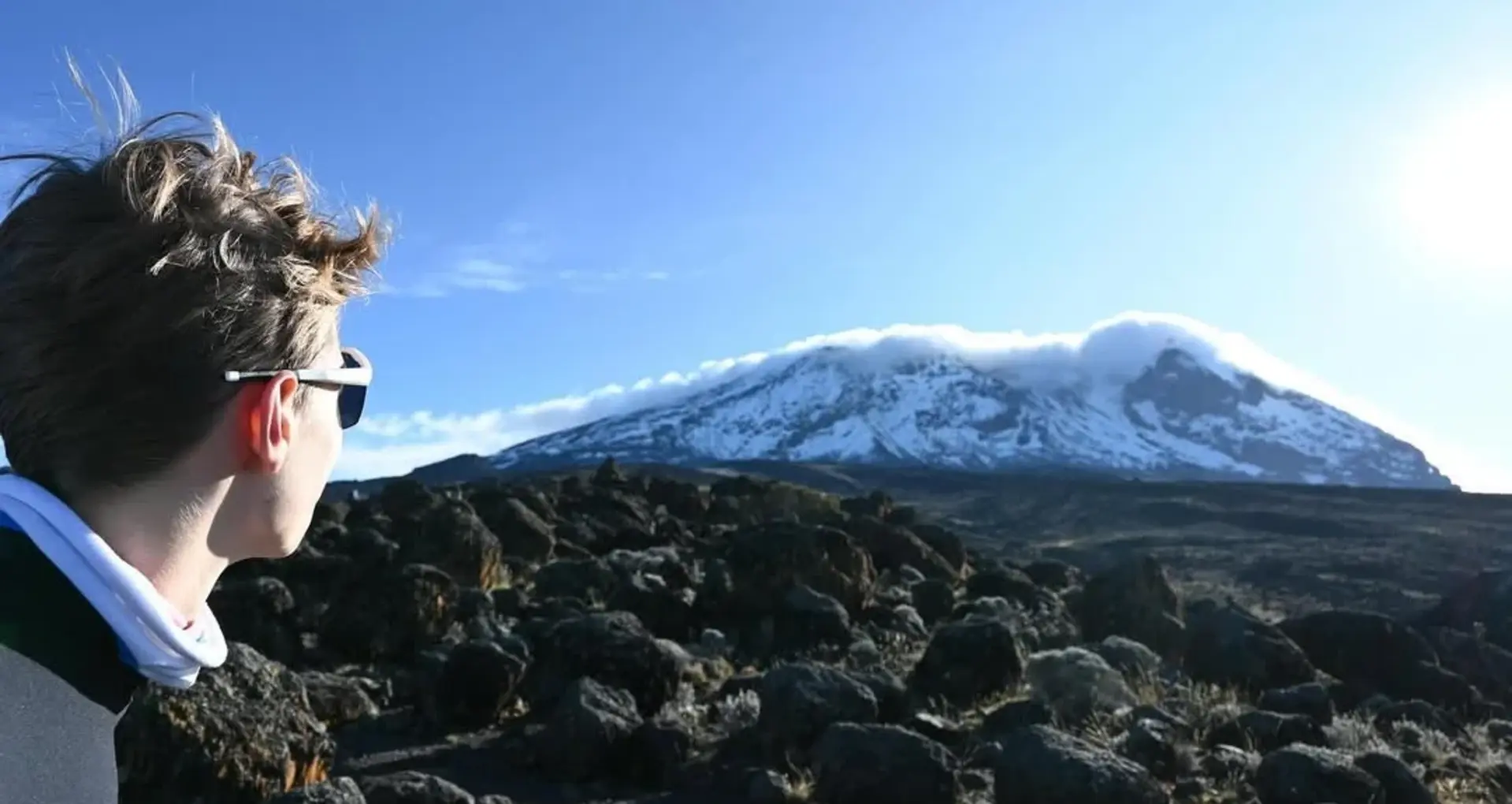
Many travellers admire Kilimanjaro from afar—most notably from Amboseli National Park in Kenya, where the mountain’s snow-capped peak dominates the skyline. While this view is iconic, Tanzania offers equally stunning vistas from routes like Machame and Marangu.
Climbing Kilimanjaro
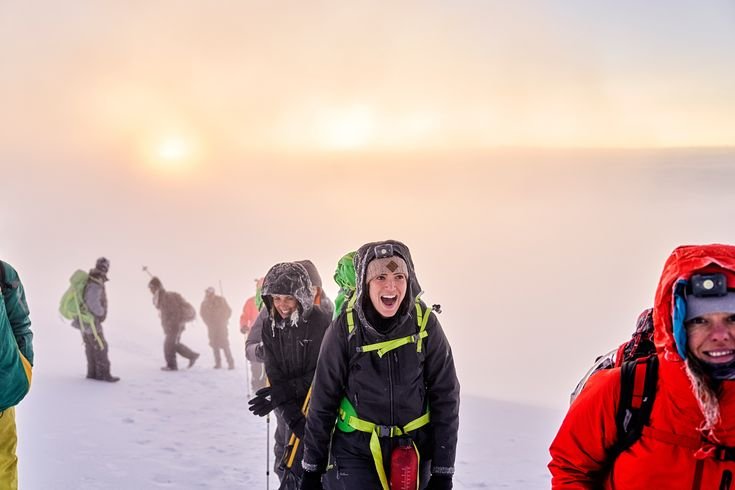
Climbing Kilimanjaro is accessible to most healthy, physically active individuals, as it does not require technical mountaineering skills. The main challenges are altitude sickness and acclimatisation. Guided expeditions by experienced operators like Kilisherpas Travel ensure safety and success.
Additional Excursions
Beyond climbing, visitors can explore the region’s wildlife and landscapes through safaris in Arusha National Park, visit waterfalls like Materuni, or take a scenic helicopter tour for a breathtaking aerial view of the mountain.
Final Thoughts
From its precise location in Tanzania to its status as the highest free-standing mountain in the world, Kilimanjaro’s significance is unparalleled. Its unique geological formation, ecological diversity, and breathtaking vistas make it a bucket-list destination for adventurers and nature lovers alike. At Kilisherpas Travel, we’re dedicated to helping you discover this awe-inspiring peak, whether through trekking, sightseeing, or cultural exploration.