A safari experience does not end at sunset. In fact, some of the most fascinating wildlife activity occurs after dark. Night safaris provide a rare opportunity to photograph nocturnal predators, observe unique animal behaviour, and capture the African wilderness under a sky full of stars.
However, night photography on safari presents distinct challenges, including low light, moving subjects, and limited visibility. This guide outlines essential equipment, camera settings, and techniques to help you capture high-quality nocturnal wildlife images.
1. Essential Gear for Night Safari Photography
Low-light conditions make proper equipment critical for success.
Recommended gear:
Full-frame camera with strong low-light performance (e.g., Sony A7S III, Canon EOS R6, Nikon Z6 II)
Fast lenses with wide apertures (f/1.8 to f/2.8)
Tripod or monopod for stability
Camera with strong high ISO performance (ISO 3200 and above)
Remote shutter release to reduce vibration
Flash or spotlight (only where permitted)
Red or green headlamp to preserve night vision
2. Understanding the Challenges
Night safari photography requires adapting to several limitations:
Low light conditions: Reduced light makes it difficult to capture sharp images, especially of moving animals
Limited visibility: Animals are harder to detect and track
Regulations: Many parks restrict or prohibit flash photography
Stability constraints: Tripods are often impractical in safari vehicles; alternatives such as beanbags are recommended
3. Best Camera Settings for Night Photography
Manual control is essential to balance exposure, sharpness, and noise.
Recommended starting settings:
Mode: Manual (M)
Aperture: f/2.8 or widest available
Shutter speed:
1/100s to 1/250s for wildlife movement
1–10 seconds for static scenes or landscapes
ISO: 3200 to 12,800 depending on light conditions
Focus: Manual focus or single-point autofocus
White balance: Auto, Tungsten, or Cloudy depending on the scene
Using back-button focus can improve focusing accuracy in low light conditions.
4. Capturing Nocturnal Wildlife
Night safaris provide opportunities to photograph species rarely seen during the day.
Common subjects:
Leopards
Lions
Hyenas
Owls and night birds
Smaller mammals such as genets and bush babies
Photography techniques:
Use diffused lighting where permitted to avoid harsh illumination
Look for reflective eyes, which help identify animals in darkness
Slightly underexpose images to preserve highlights
Use burst mode to improve chances of capturing sharp action shots
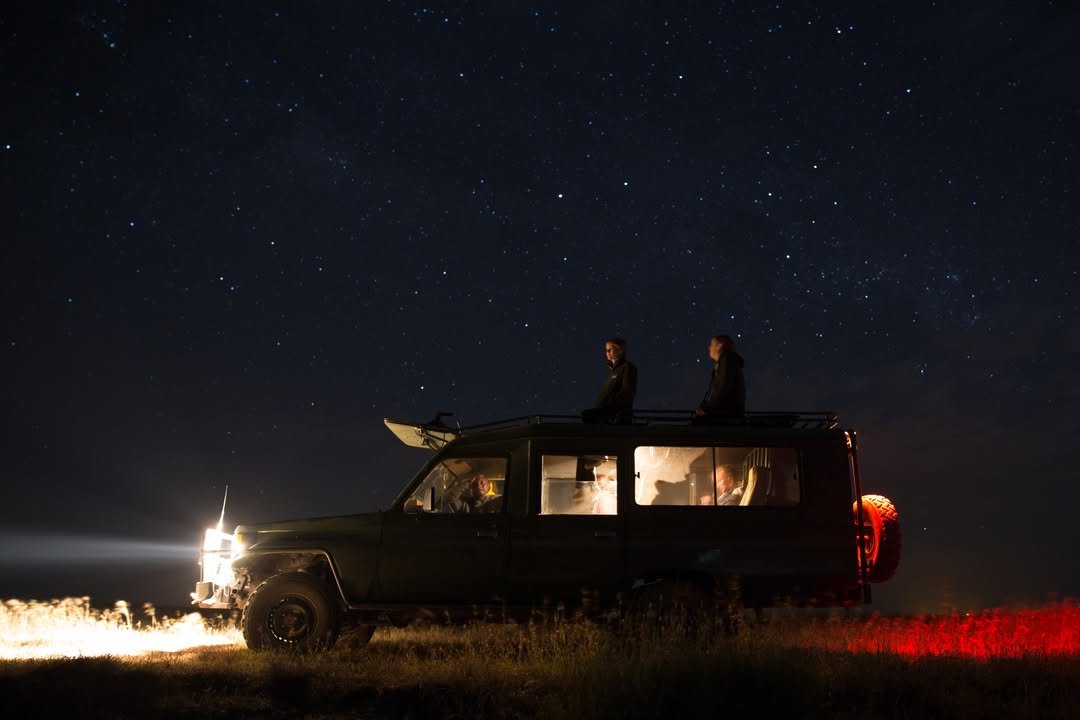
5. Photographing the Night Sky
In addition to wildlife, the Serengeti offers exceptional conditions for astrophotography due to minimal light pollution.
Suggested settings for stars:
Shutter speed: 15–30 seconds
Aperture: f/2.8 or wider
ISO: 3200–6400
Focus: Manual, set to infinity
Including foreground elements such as acacia trees or silhouettes can enhance composition and add depth.
6. Ethical Considerations
Responsible photography is essential, especially at night when animals are most sensitive to disturbance.
Follow all park and guide regulations
Avoid flash photography where prohibited
Limit use of artificial light
Avoid directing strong light into animals’ eyes
Maintain a quiet and respectful presence
Ethical practices ensure both animal welfare and a more authentic safari experience.
7. Additional Practical Tips
Begin shooting during twilight for better natural light conditions
Stabilize your camera using a beanbag or vehicle support
Apply noise reduction during post-processing to improve image quality
Take multiple shots and experiment with settings to adapt to conditions
Conclusion
Night photography on safari offers a unique and rewarding perspective on Tanzania’s wildlife. From capturing nocturnal predators in action to photographing the vast African night sky, it requires preparation, patience, and technical skill.
With the right approach and respect for the environment, you can produce striking images that reveal a side of the wilderness few get to experience.
At Kilisherpas Travel, we provide expertly guided safaris designed to help you explore and photograph Tanzania’s wildlife responsibly—both day and night.